You are about to swap a token on a familiar DeFi app. The wallet asks for an approval first, then a second transaction for the swap. The amounts look routine, so you click through both prompts. Weeks later, the application is exploited—or you simply forget that the approval remains active. If the approved contract is compromised, it may still be able to move tokens from your address within the allowance you granted.
This is the central security problem behind token approvals: an approval is not the same thing as a one-time payment. It is a permission recorded on a blockchain, and its duration may outlast the transaction that created it. Transaction simulation can make the immediate consequences more visible, while approval management helps reduce permissions that no longer serve a purpose. Used together, they form a more useful defense than either feature alone.
What a Token Approval Actually Does
Most Ethereum-compatible tokens follow the ERC-20 model. A token holder can call a contract function commonly known as approve, naming a spender and an allowance. The spender is usually a DeFi router, lending protocol, bridge, or other smart contract. Once the approval is recorded, that contract can later call transferFrom to move the specified token amount from the holder’s address.
The important mental model is that the approval changes the token contract’s permission table. It does not necessarily move tokens at the moment the approval transaction is confirmed. A swap interface may therefore request two separate transactions: first, permission to spend; second, execution of the swap. Some newer token standards and applications use signature-based permissions, such as permit-style approvals, which can reduce the number of on-chain transactions but do not eliminate the underlying authorization risk.
There are two dimensions to evaluate. The first is who can spend: the contract address designated as the spender. The second is how much can be spent: the allowance amount. An unlimited approval is convenient because future swaps may not require another approval transaction, but it creates a larger exposure if the spender is exploited or behaves maliciously. A limited approval narrows the potential loss, although it may require additional transactions and gas.
A subtle but common misconception is that disconnecting a wallet from a website removes its approvals. It does not. Disconnecting affects the website’s current connection to the wallet interface; the allowance remains in the token contract until it is changed or revoked. Likewise, deleting a browser extension, changing computers, or moving to another wallet interface does not erase permissions already recorded on-chain.
Why Transaction Simulation Matters
A wallet confirmation window often compresses a complicated contract call into an address, a method name, and an amount. Transaction simulation attempts to execute that proposed transaction in an estimated blockchain state before the user signs it. The resulting preview can indicate which assets may leave the wallet, which assets may arrive, whether an approval is being created, and whether the transaction is likely to fail.
This is valuable because the most dangerous transaction is not always the one that looks expensive. A malicious signature request might transfer a small amount immediately, establish a broad token allowance, or interact with a contract whose address does not match the application the user intended to use. Simulation moves the review from “Does this website look familiar?” to “What state change is this transaction proposing?” That is a sharper security question.
For a US-based DeFi user, the practical benefit is especially clear when switching among networks. A transaction on Ethereum, Arbitrum, Base, Polygon, or another EVM-compatible network may involve different contracts and different token deployments, even when the application branding appears identical. A simulation can help expose the chain-specific outcome, but the user still needs to verify that the selected network and token are the intended ones.
Simulation is not a guarantee of safety. It depends on the state made available by the wallet or RPC provider, and the blockchain can change between simulation and confirmation. A transaction may also depend on off-chain signatures, oracle updates, block timing, private order flow, or contract behavior that is difficult to represent perfectly in advance. A simulation can show what a transaction appears likely to do; it cannot prove that the protocol, front end, token, or future contract behavior is trustworthy.
That boundary is worth emphasizing. Simulation is strongest at detecting an unintended immediate result, such as a token transfer, a suspicious approval, or a failed call. It is weaker at answering broader questions: Is the protocol economically sound? Is the token a honeypot? Could the contract be upgraded later? Is the website authentic? Security is therefore a layered process rather than a single green warning or reassuring preview.
How Rabby Fits Into the Review Process
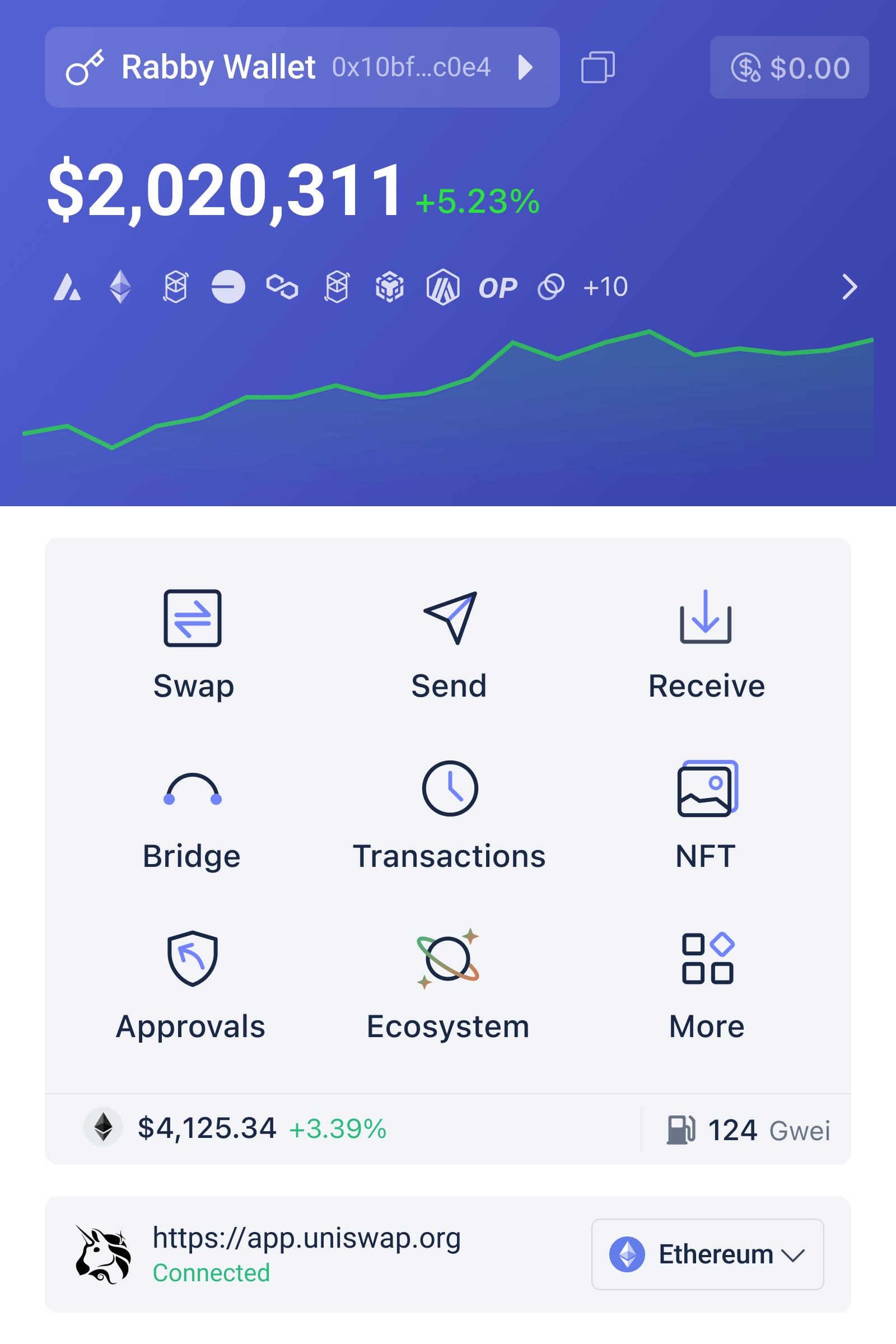
Rabby is designed around a transaction-review workflow that emphasizes what a proposed DeFi action is expected to do before signing. For users who want to rabby extension download, the relevant security principle is not merely installing another wallet interface. It is adopting a habit of inspecting permissions, recipients, network context, and simulation results before approving a transaction.
After installation, users should treat the browser extension as a review layer, not as a substitute for judgment. Confirm that the extension is obtained from a source you trust, check that the browser is displaying the expected wallet, and avoid entering a seed phrase into a website or support form. A wallet extension can display useful warnings while the user is interacting with a deceptive site; the warning is an opportunity to pause, not evidence that continuing is safe.
When a DeFi application requests an approval, examine the token, spender, network, and allowance. The spender should correspond to the protocol action you intend to perform, but visual familiarity is not enough: addresses can be copied, contracts can be upgraded, and similarly named tokens can exist on different networks. If the application offers a choice between an exact amount and an unlimited amount, the exact amount generally reduces authorization scope, at the cost of a possible additional approval later.
The same review applies to signature requests. A message that does not require gas can still authorize an important action. Permit-style approvals, marketplace authorizations, and other typed-data signatures may allow a contract or relayer to act later. The absence of a gas charge should never be treated as proof that no value or permission is at stake.
Three Ways to Manage Approval Risk
Wallet-level warnings and simulation
The first approach is to inspect each transaction at signing time. Its strength is immediacy: it can catch a surprising recipient, an unexpected token movement, or a broad allowance before the transaction is broadcast. This method also scales across many applications because it does not require maintaining a separate list of every permission.
Its weakness is human attention. Users who approve many transactions may begin to click through warnings, particularly when a transaction fails and the application asks them to retry. Simulation can also be incomplete when a contract uses unusual logic or when the relevant state changes rapidly. Wallet review is therefore most effective when the user has a clear stop rule: if the asset, spender, network, or expected outcome is unclear, do not sign immediately.
Approval dashboards and revocation tools
The second approach is periodic inventory. Approval-management tools can identify token allowances associated with an address and allow the user to reduce or remove them. This is useful after testing an unfamiliar application, abandoning a protocol, or discovering that an old approval is broader than intended. Revoking an allowance usually requires an on-chain transaction, so the user must pay network fees and select the correct chain.
Revocation is often misunderstood as a rollback. It does not reverse transfers that already occurred, recover assets stolen through a compromised contract, or repair a malicious signature that granted a different type of permission. It changes the future authority represented by a particular allowance. The spender address and permission type must therefore be checked carefully; removing one token approval does not necessarily remove approvals for other tokens or other networks.
Hardware wallets and separated accounts
The third approach is account separation. A hardware wallet can protect private-key material from many forms of malware, while separate accounts can limit the amount exposed to experimental protocols. These measures are valuable, but they do not make a signed approval safe. If the user authorizes a harmful transaction on a hardware wallet, the device may faithfully confirm the user’s decision.
Separation also introduces operational costs. Funds must be moved between accounts, network fees must be managed, and the user must avoid confusing a testing account with a long-term savings account. A sensible structure might keep a smaller active balance in an account used for routine DeFi and reserve larger holdings in an account that interacts rarely. This reduces concentration of risk, but it does not eliminate the need to inspect transactions.
A Reusable Approval-Review Framework
A practical review can be organized around four questions: what is being authorized, who receives the authority, how much value is exposed, and how long the permission may remain active. The fourth question is frequently neglected because many approvals have no automatic expiration. An approval that was reasonable for a five-minute experiment may be unnecessary months later.
Before signing, compare the proposed action with the action you intended. A token swap should not unexpectedly include a different token transfer. A lending deposit should identify the expected asset and destination protocol. An approval should identify a spender that makes sense for the operation. If the preview cannot be understood, the correct response is not to infer that it is harmless; it is to stop and investigate through an independent route.
After signing, record the decision mentally or operationally. If the application was a one-time interaction, schedule a later review or revoke the approval when the position is closed. If the application is used regularly, an allowance policy can help: exact approvals for unfamiliar protocols, limited allowances for experimental activity, and only carefully considered broader approvals for established workflows. This is not a universal rule, but it converts vague caution into a repeatable process.
Approval management also has an economic trade-off. Exact approvals may cost more in gas and add friction, particularly on networks where fees fluctuate. Unlimited approvals reduce repeated costs but increase the amount of authority left outstanding. The right choice depends on the value at risk, the trust placed in the spender, the frequency of use, and the user’s ability to monitor the account. Convenience is not free; it is purchased with a wider permission boundary.
What to Watch as DeFi Interfaces Evolve
If wallet interfaces improve their simulations and permission displays, the likely benefit is not that users will stop needing security judgment. The more plausible benefit is that confusing contract behavior becomes visible earlier, especially across multiple networks and complex protocols. The signal to watch is whether previews become more specific about authority, expiration, upgradeability, and post-transaction balances rather than merely labeling transactions as safe or unsafe.
There is also an unresolved design tension. More detailed warnings can improve informed decisions, but too many warnings can create alert fatigue. A useful interface must distinguish a routine, narrow permission from a broad or unusual one without turning every transaction into an unreadable technical report. Until that balance improves, disciplined users should focus on the highest-value facts: the chain, the asset, the spender, the amount, and whether the permission persists.
Frequently Asked Questions
Does revoking a token approval make my wallet completely safe?
No. Revocation removes or reduces a particular allowance, but it does not protect against a compromised private key, a malicious new signature, phishing, or approvals granted to other contracts. It also cannot reverse transfers that have already taken place. Treat revocation as permission cleanup, not as a complete security reset.
Should I always use exact token approvals?
Exact approvals generally reduce the amount a spender can move, so they are a conservative choice, especially for unfamiliar or experimental applications. They may require another on-chain transaction and additional network fees. A broader approval may be operationally convenient for a frequently used protocol, but it should be an intentional trade-off rather than the default response to a prompt.
Can transaction simulation detect every scam?
No. Simulation can reveal many unexpected state changes, but it cannot establish that a website is authentic, that a contract will remain honest, or that an economic strategy is sound. It may also be limited by changing blockchain state, off-chain components, or unusual contract logic. Use simulation alongside address verification, account separation, cautious signing, and periodic approval reviews.
The most useful shift is conceptual: a DeFi wallet is not only a place where transactions happen; it is also a record of permissions granted over time. Simulation helps evaluate the next proposed state change, while approval management examines the authority that remains after the transaction is finished. When users apply both perspectives, they are less likely to confuse a successful transaction with a safe permission—and better able to decide when convenience is worth the exposure.

Leave a Reply